HomePowerIQ is reader-supported. When you buy through links on our site, we may earn a commission at no extra cost to you. As an Amazon Associate we earn from qualifying purchases. Our picks are based on specs, prices and published data, never on payment. How we make money.
On this page
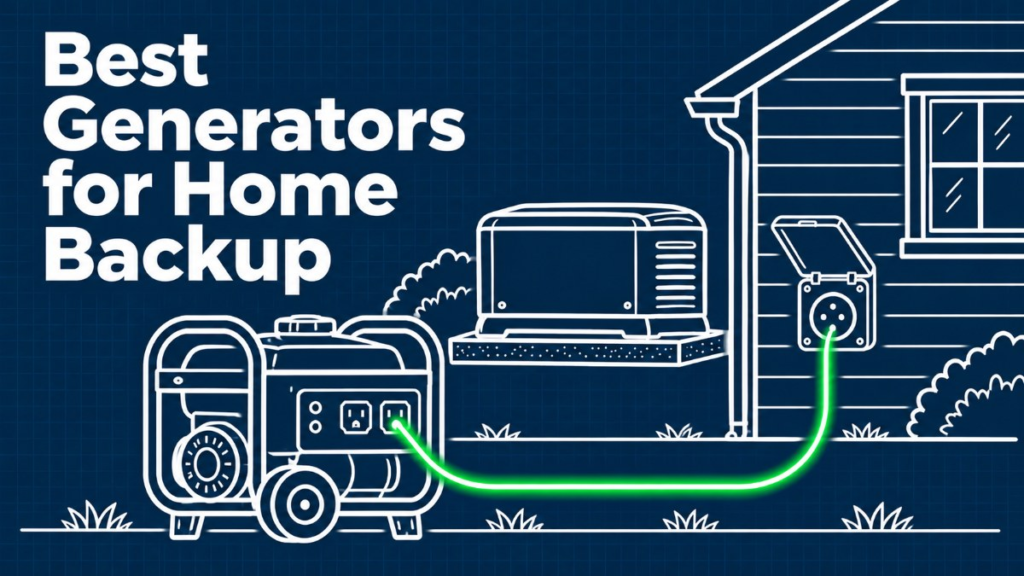
Short answer: for most homes, the best backup generator is a dual-fuel portable in the 9,000–9,500 running-watt range with a 30A or 50A transfer-switch outlet, like the Westinghouse WGen9500DF. It can run a fridge, furnace, well pump, lights and a window AC at once. Want quieter, cleaner power? The Champion 9000W Tri Fuel open-frame inverter. Need hands-off whole-house power? A Generac Guardian 22 kW standby generator.
How we picked: we compared manufacturer specs for running and starting watts, fuel options, outlets for a transfer switch, runtime, noise and safety features, then matched each to a home backup need. We have not hands-on tested these generators.
Quick comparison
| Generator | Running / starting watts | Fuel | Home connection | Best for |
|---|---|---|---|---|
| Westinghouse WGen9500DF | 9,500 / 12,500 W (gas) | Gas or propane | 50A and 30A outlets | Best overall portable |
| DuroMax XP12000EH | 9,500 / 12,000 W (gas) | Gas or propane | 50A outlet | Most propane power per dollar |
| Champion 9000W Tri Fuel Inverter | 7,250 / 9,000 W (gas) | Gas, propane or natural gas | 50A and 30A outlets | Quieter, clean inverter power |
| Honda EU2200i | 1,800 / 2,200 W | Gas | Cords (20A) | Quiet essentials, fridge + electronics |
| Generac Guardian 22 kW (7043) | 22,000 W (LP) / 19,500 W (NG) | Natural gas or propane | Whole-house auto switch included | Automatic whole-house backup |
Specs from manufacturer pages, November 2026. Propane and natural gas ratings are lower than gasoline.
The best generators for home backup
Westinghouse WGen9500DF
- Gasoline: 9,500 running / 12,500 peak W
- Propane: 8,500 running / 11,200 peak W
- Outlets: 14-50R (50A) and L14-30R (30A)
- Tank: 6.6 gal, up to 12 h at 25% load
- Start: remote key fob, electric, recoil
The WGen9500DF hits the sweet spot for home backup: enough running watts for a fridge, freezer, furnace fan, sump or well pump and lights, with both 30A and 50A outlets to connect through a transfer switch or interlock. Dual fuel lets you store propane, which does not go stale. A CO-sensor version (WGen9500DFc) is also sold.
What we like
- Enough power for most essential circuits
- Transfer-switch ready with 50A and 30A outlets
- Remote start and fuel gauge
Watch out for
- Loud, like most conventional generators
- Heavy; needs wheels and a flat path
DuroMax XP12000EH
- Gasoline: 9,500 running / 12,000 starting W
- Propane: 9,025 running / 11,400 starting W
- Tank: 8.3 gal
- Weight: about 224 lb
DuroMax’s 12,000-watt dual fuel keeps more of its power on propane than most rivals (9,025 running watts), which matters if you plan to run on stored propane through long outages. Look for the current XP12000HX version with CO Alert shutdown.
What we like
- Very strong propane output
- Large fuel tank
- 50A outlet for transfer switch
Watch out for
- Very heavy
- Loud
Champion 9000W Tri Fuel Open Frame Inverter
- Gasoline: 7,250 running / 9,000 starting W
- Propane: 6,525 running W
- Natural gas: 5,875 running W
- Noise: 72 dBA
- Safety: CO Shield auto shutoff
If you want clean, inverter-quality power for furnace controls and electronics, plus the option to hook into natural gas for long outages, this open-frame inverter is a strong middle ground. Champion rates it 50% quieter and 20% lighter than its traditional 7,250-watt generator.
What we like
- Inverter power safe for electronics
- Runs on natural gas too
- Quieter and lighter than a comparable conventional unit
Watch out for
- Fewer running watts than the 9,500 W picks
- Higher price per watt
Honda EU2200i
- Output: 1,800 running / 2,200 starting W
- Noise: about 48–57 dB(A)
- Weight: about 46.5 lb
- Runtime: 3.2 h at rated load, 8.1 h at 1/4 load
For apartments, townhomes or anyone who only needs the fridge, phones, Wi-Fi and a few lights, the EU2200i is the quiet, dependable choice. Two can be paralleled for more power.
What we like
- Very quiet and reliable
- Light enough to carry
- Can be paired with a second unit
Watch out for
- Only runs a fridge plus small loads
- Gasoline only, small tank
Generac Guardian 22 kW (7043)
- Output: 22,000 W (LP) / 19,500 W (NG)
- Transfer switch: 200A whole-house included
- MSRP: from $6,979 before installation
- Warranty: 5-year limited
If outages are frequent or long, or someone in the home relies on power, an automatic standby generator is the most hands-off option. See our Generac generator cost guide and installation cost breakdown.
What we like
- Starts automatically in seconds
- Runs the whole house on natural gas or propane
- No refueling or setup in an outage
Watch out for
- Total installed cost often $8,000–$16,000
- Needs permits and professional install
How to choose a generator for your home
1. Size it to your loads
Add the running watts of what you want to power, then add the largest starting surge. Most homes need 5,000–7,500 watts for essentials and 9,000+ for a well pump or central AC. Use our generator size calculator.
2. Pick your fuel
Gasoline is easy to find but goes stale in months. Propane stores for years. Natural gas never runs out but only some portables accept it. Dual- or tri-fuel gives you options.
3. Plan the connection
A 30A (L14-30) or 50A (14-50) outlet lets an electrician connect the generator through a transfer switch or interlock kit. See how to hook up a generator safely.
4. Inverter or conventional?
Inverters are quieter and cleaner; conventional units give more watts per dollar. See inverter vs regular generators.
5. Look for CO safety shutoff
Many current models shut down automatically if carbon monoxide builds up. It is worth having, but it never makes indoor use safe. Always run a generator outside, at least 20 feet from the house.
Portable backup generator or whole house standby?
A home backup portable generator is the budget route: it costs a fraction of a standby system and connects through an interlock kit or transfer switch, but you have to set it up, start it and refuel it. A standby generator starts on its own and can power the whole house. If you want automatic power, see our best whole house generators. For the quietest portable option, see the best inverter generators for home backup, and use what size generator do I need to size either one.
Frequently asked questions
What size generator do I need to run my house?
Essentials (fridge, freezer, furnace fan, lights, Wi-Fi, sump pump) usually need 5,000–7,500 running watts. Adding a well pump or central AC typically takes 9,000+ watts or a standby generator.
Is a portable or standby generator better?
Portable generators cost far less but need setup and refueling. Standby generators are automatic and run the whole house but usually cost $8,000–$16,000 installed.
Can a 9,500-watt generator run central air?
Often yes for a 2–3 ton AC if other loads are limited, especially with a soft-start kit on the AC. Check your AC’s running and locked-rotor amps.
How long can a portable generator run?
Typically 8–14 hours per tank at a quarter to half load. Propane runtime depends on tank size.
Do I need a transfer switch?
Not for extension cords. To power hardwired circuits, yes: a transfer switch or interlock kit installed by an electrician.
Sources: Westinghouse WGen9500DF; DuroMax XP12000EH specs (Norwall); Champion 9000W Tri Fuel open frame inverter; Honda EU2200i specs; Generac Guardian 22 kW. Checked November 2026.