On this page
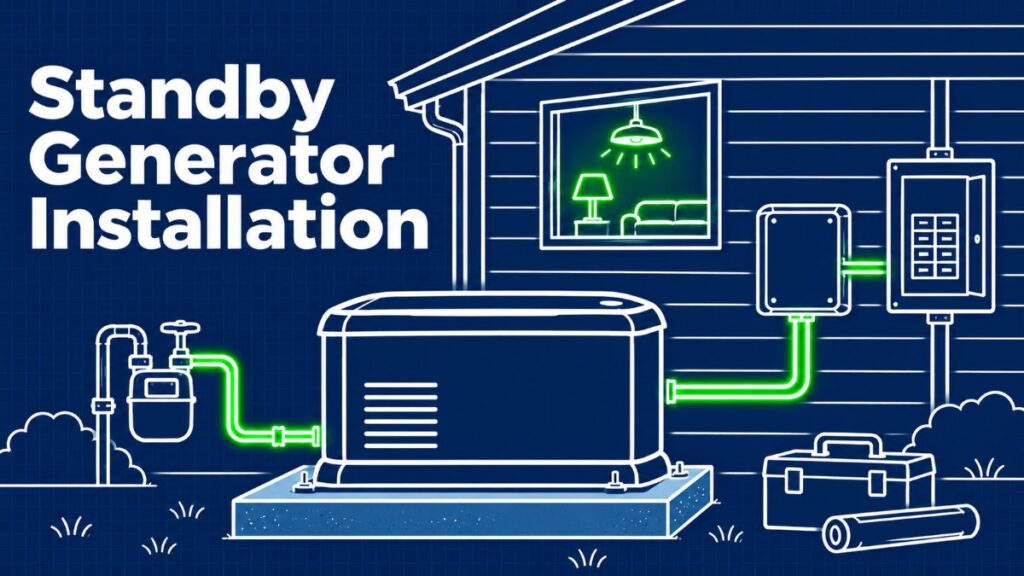
Short answer: standby generator installation takes one to two days of actual work, but the whole process usually takes three to eight weeks because of permits, equipment lead times and inspections. A licensed installer pours or sets the pad, runs the gas line, wires the automatic transfer switch, starts the unit and schedules inspection. Most homeowners pay $8,000 to $16,000 for a generator and installation together.
How we put this together: we combined manufacturer installation guidance, utility and permit-office information and installer-published timelines. Local codes vary, so your installer and building department have the final say.
Standby generator installation timeline
| Phase | Typical time |
|---|---|
| Site visit, load calculation and quote | 1 to 2 hours, then a few days for the quote |
| Permits (electrical, gas, sometimes building or zoning, HOA) | 1 to 4 weeks, longer in busy cities |
| Equipment lead time | In stock to several weeks |
| Installation | 1 to 2 days |
| Inspection and final sign-off | A few days to 2 weeks after install |
Generac notes that the installation itself usually takes hours, while preparing for it takes multiple weeks, depending on dealer availability, gas line preparation and permits. Book before storm season if you can.
Step-by-step: how a standby generator is installed
- Site visit and sizing. The installer walks your property, lists the appliances you want covered, checks your electrical panel and gas meter and recommends a size. Use our size calculator beforehand so you know what to expect.
- Quote and fuel plan. You get a written quote covering the generator, transfer switch, pad, fuel line, electrical work and permits. If you use natural gas, the utility may need to confirm your meter can supply the generator. If you use propane, a tank is sized and placed.
- Permits. The installer usually pulls the electrical permit and a gas or plumbing permit. Some towns also require a building or zoning permit, and HOAs may need to approve placement.
- Site prep and pad. The generator sits on a composite or concrete pad on level ground. Placement follows the manufacturer’s clearances and local code, which typically keep it away from windows, doors, vents and property lines.
- Fuel line. A licensed gas fitter runs and pressure-tests the line from the meter or tank to the generator. Pipe size matters, because the line has to supply the generator at full load.
- Transfer switch and wiring. An electrician installs the automatic transfer switch next to or in place of your main panel and runs wiring to the generator. Whole-house switches handle every circuit; smaller ones cover selected circuits.
- Startup and testing. The installer adds oil, sets up the controller and Wi-Fi monitoring, sets the weekly exercise schedule and simulates an outage to confirm the switch works.
- Inspection. The local inspector checks the electrical and gas work. Some utilities also require notice of a standby generator.
What drives installation cost
| Cost item | Why it varies |
|---|---|
| Generator | Size and brand; $4,000 to $8,000 for most air-cooled home units |
| Transfer switch | Whole-house switches cost more than circuit-level ones; often bundled |
| Pad and placement | Distance from the house, slope, and setback rules |
| Gas line | Run length, pipe size and whether the gas meter needs an upgrade |
| Propane tank | Buying or leasing a tank, plus line and regulators |
| Electrical work | Wire run, panel condition and any panel upgrade |
| Permits and inspection | Set by your town; usually a few hundred dollars |
Full numbers are in our whole house generator cost and Generac generator cost guides.
Can you install a standby generator yourself?
In most places, no. The transfer switch connects to your main electrical service and the generator connects to a gas supply, so most jurisdictions require licensed trades and permits. Manufacturer warranties also generally depend on proper installation. If you are handy and on a budget, the realistic DIY-friendly route is a portable generator with an interlock kit or inlet box, installed by an electrician, which we explain in how to hook up a generator to your house.
How to choose an installer
- Get at least three written quotes and compare them line by line.
- Make sure each quote includes the transfer switch, pad, fuel line, permits, startup and inspection.
- Ask whether the installer is an authorized dealer for the brand, which can matter for warranty claims.
- Ask who handles maintenance and how fast they respond after storms.
- Confirm the proposed location meets clearance rules and will not sit under a bedroom window.
Before you call an installer
Decide which brand and size you are leaning toward. Our best whole house generators guide compares the main options, and natural gas vs propane covers the fuel decision. If noise is a concern, check the quietest standby generators before you pick a spot.
Frequently asked questions
How long does it take to install a standby generator?
The work itself usually takes one to two days. Counting the site visit, permits, equipment and inspection, expect about three to eight weeks from first call to a working system.
Do I need a permit to install a standby generator?
Yes, in virtually all US jurisdictions. Most installs need an electrical permit and a gas or plumbing permit, and some also need a building or zoning permit.
How much does standby generator installation cost?
Generator plus installation usually runs $8,000 to $16,000. Installation alone is often $3,000 to $8,000, depending on the fuel line, electrical work and site prep.
How close to the house can a standby generator be installed?
It depends on the model and local code. Some Generac Guardian units are listed for installation as close as 18 inches from the home, but they still have to stay clear of windows, doors and vents.
Does a standby generator need maintenance after installation?
Yes. Plan on a yearly service with oil, filters and a battery check. The generator also runs a short self-test each week.