HomePowerIQ is reader-supported. When you buy through links on our site, we may earn a commission at no extra cost to you. As an Amazon Associate we earn from qualifying purchases. Our picks are based on specs, prices and published data, never on payment. How we make money.
On this page
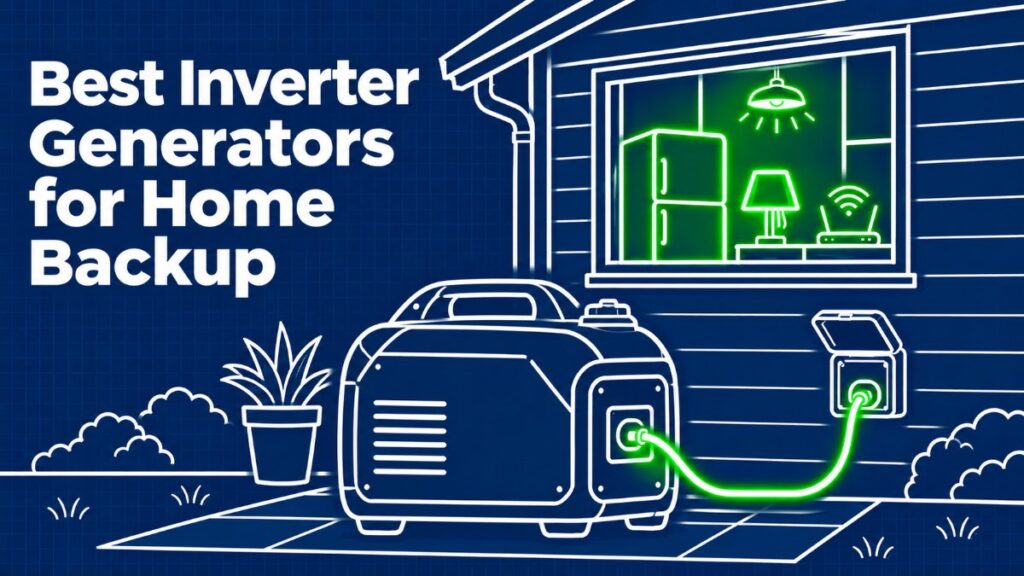
Short answer: for home backup, get an inverter generator with at least 5,000 running watts, ideally dual fuel, with a 30 A outlet for a transfer switch. Our picks: the Honda EU7000is (best overall, 120/240V), the Champion 9000W Tri Fuel Inverter (best for fuel flexibility), the Westinghouse iGen5000 (best mid-size value) and the Honda EU2200i (quietest small backup). Inverters are quieter and give cleaner power than open-frame generators, but cost more per watt.
How we picked: we compared manufacturer specs for running and starting watts, voltage, fuel options, runtime, noise and safety features, then matched each to a home backup need. We have not hands-on tested these generators.
Quick comparison
| Generator | Running / starting watts | Fuel | 240V? | Best for |
|---|---|---|---|---|
| Honda EU7000is | 5,500 / 7,000 W | Gasoline (fuel-injected) | Yes | Best overall home backup |
| Champion 9000W Tri Fuel Inverter | 7,250 / 9,000 W (gas) | Gas, propane, natural gas | Check model outlets | Most power and fuel choice |
| Westinghouse iGen5000 | 3,900 / 5,000 W | Gasoline | No | Mid-size value, quiet |
| Honda EU2200i | 1,800 / 2,200 W | Gasoline | No | Fridge, lights and phones, very quiet |
Specs from manufacturer product pages and retailer listings, November 2026. Running watts are what matter for sizing; starting watts cover the brief surge when motors start.
Why an inverter generator for home backup?
An inverter generator converts its power electronically, so the output is stable and clean enough for computers, TVs and modern appliances with circuit boards. It also throttles the engine to match the load, which makes it quieter and more fuel-efficient at light loads. The trade-off is price: an inverter costs more per watt than an open-frame generator. We explain the differences in inverter vs regular generator.
The best inverter generators for home backup
Honda EU7000is
- Output: 5,500 running / 7,000 starting W
- Voltage: 120V / 240V
- Fuel: gasoline, electronic fuel injection
- Start: electric
- Noise: low for its size
The EU7000is is the big, quiet inverter many backup buyers want: enough power for a fridge, furnace, well pump and lights through a transfer switch, with clean 240V output. It costs more than open-frame units, but it is built to last.
What we like
- Large, true inverter with 240V
- Fuel injection starts easily in cold weather
- Honda reliability
Watch out for
- Premium price
- Gasoline only
Champion 9000W Tri Fuel Inverter
- Gasoline: 7,250 running / 9,000 starting W
- Propane: 6,525 running W
- Natural gas: 5,875 running W
- Noise: about 72 dBA
- Safety: CO Shield auto shutoff
Tri-fuel means you can hook it to a natural gas line or propane tank and avoid storing gasoline. It is the strongest pick here for running a larger set of essentials.
What we like
- Runs on gas, propane or natural gas
- Most running watts here
- Good price per watt for an inverter
Watch out for
- Louder than closed inverters
- Heavy
Westinghouse iGen5000
- Output: 3,900 running / 5,000 peak W
- Noise: about 52 dBA
- Runtime: up to about 18 hours
- Start: remote and electric
A quiet, efficient choice for a fridge, freezer, internet, lights and a window AC or space heater.
What we like
- Very quiet
- Long runtime on one tank
- Remote start
Watch out for
- 120V only
- Not enough for a well pump plus everything else
Honda EU2200i
- Output: 1,800 running / 2,200 starting W
- Noise: about 48 to 57 dB(A)
- Weight: about 46.5 lb
- Runtime: 8.1 h at 1/4 load
Enough for a refrigerator, lights, phones and internet. See how many watts a refrigerator uses.
What we like
- Extremely quiet
- Light and easy to carry
- Can be paired with a second unit
Watch out for
- Small output
- Gasoline only
How many inverter watts do you need?
| What you want to run | Running watts to plan for |
|---|---|
| Fridge, lights, phones, internet | 2,000 W |
| Plus freezer, TV, microwave | 3,500 to 4,500 W |
| Plus gas furnace blower or well pump | 5,000 to 6,000 W |
| Plus a window AC or two | 6,000 to 7,500 W |
Add up your own loads with the generator size calculator. If you need central AC or the whole house at once, look at whole house standby generators instead.
How to connect an inverter generator to your house
Use a generator inlet box with a interlock kit or a manual transfer switch, installed by an electrician, and a 30 A cord from the generator’s L14-30 outlet. Never backfeed through a dryer outlet. Our guide to hooking up a generator to your house covers the safe options. Always run the generator outdoors, well away from doors and windows.
Inverter generator or battery?
If you want silent backup that is safe indoors, a large power station does a similar job without fuel, at a higher price per hour of runtime. See best portable power stations and battery vs generator.
Frequently asked questions
What size inverter generator do I need for home backup?
About 2,000 watts runs a fridge, lights and internet. Plan on 5,000 to 7,500 running watts to add a furnace blower, well pump or window AC.
Can an inverter generator run a whole house?
Not usually. The largest portable inverters can run many essentials through a transfer switch, but whole-house power, including central AC, takes a 20 kW-class standby generator.
Are inverter generators worth it for home backup?
Yes, if you value quiet operation, fuel efficiency and clean power for electronics. Open-frame generators give more watts per dollar but are louder.
Can I run an inverter generator on natural gas?
Some tri-fuel models, like the Champion 9000W Tri Fuel Inverter, can run on natural gas with the right connection. Output is lower on natural gas than on gasoline.
What is the quietest inverter generator for home backup?
Small inverters like the Honda EU2200i are the quietest. Among larger units, closed-frame models such as the Westinghouse iGen5000 and Honda EU7000is are quieter than open-frame inverters.